

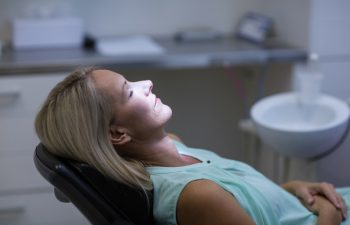
You know you should go to the dentist. You’ve known for months—maybe years. But every time you think about picking up the phone to schedule, something stops you. Your heart races. Your palms sweat. You tell yourself you’ll call tomorrow, and tomorrow becomes next week, next month, another year.
If this sounds familiar, you’re not weak, dramatic, or “bad” at being an adult. You have dental anxiety, and it affects far more people than you might think. Studies suggest that anywhere from 36% to 75% of adults experience some level of dental fear, with 5-10% suffering from severe dental phobia that prevents them from seeking any care at all.
At Smile Kings Dental & Orthodontics, we understand that for many San Antonio patients, the biggest barrier to oral health isn’t access or cost—it’s fear. That’s why we’ve built our practice to address dental anxiety head-on, including having an in-house anesthesiologist on our team.
Where Dental Anxiety Comes From
Understanding your fear can be the first step toward managing it. Dental anxiety rarely appears from nowhere—it usually has roots in identifiable experiences or concerns.
- Past Negative Experiences: One painful procedure, an unkind provider, or feeling dismissed when expressing discomfort can create lasting associations. Your brain learned that dental visits equal pain or humiliation, and it’s trying to protect you by triggering fear responses.
- Fear of Pain: Even without personal bad experiences, cultural narratives about dental pain are pervasive. Movies, TV shows, and casual conversation often portray dentistry as inherently painful, creating anticipatory anxiety before anything actually happens.
- Loss of Control: Lying back in a chair with your mouth open, unable to speak or move freely, triggers vulnerability. For people who’ve experienced trauma or who generally struggle with feeling out of control, this position can be deeply uncomfortable.
- Sensory Sensitivities: The sounds of dental instruments, the tastes of materials, the sensation of hands in your mouth, the smells of a dental office—any of these can trigger strong negative reactions in people with heightened sensory awareness.
- Embarrassment: Many anxious patients have avoided care long enough that their oral health has suffered. They feel ashamed of their teeth and fear judgment from dental professionals. This shame creates a cycle: avoiding care leads to worsening problems, which increases shame, which increases avoidance.
- Generalized Anxiety: For people who struggle with anxiety in general, dental visits simply become another trigger. The anticipation, the medical setting, the uncertainty about what will happen—all feed existing anxiety patterns.
What Happens When Fear Wins
Dental anxiety becomes particularly problematic because avoiding care doesn’t make the need for care go away. Teeth don’t heal themselves. Small cavities become large ones. Gum inflammation progresses to periodontal disease. Minor issues that could have been addressed easily become complex situations requiring more extensive treatment.
This creates a painful irony: the very fear meant to protect you from discomfort leads to situations that involve significantly more discomfort. The patient who avoided a simple filling eventually needs a root canal. The person who skipped cleanings develops gum disease requiring deep cleaning procedures.
Breaking this cycle requires recognizing that the fear itself—not the dental care—is the actual threat to your wellbeing.
How Modern Dentistry Has Changed
If your dental anxiety stems from experiences years or decades ago, it’s worth knowing that dentistry has evolved significantly. Techniques, technologies, and philosophies have shifted toward patient comfort in ways that might surprise you.
- Better Anesthetics: Local anesthesia is more effective than ever, and techniques for administering it have improved. Many patients report feeling nothing during procedures that would have been uncomfortable in the past.
- Less Invasive Approaches: Modern dentistry emphasizes minimally invasive techniques that preserve tooth structure and reduce recovery time. What once required aggressive drilling might now be addressed with gentler approaches.
- Improved Communication: Many dental practices now prioritize patient communication, explaining procedures beforehand, checking in during treatment, and empowering patients with stop signals if they need a break.
- Comfort Amenities: From noise-canceling headphones to weighted blankets, TVs on the ceiling to aromatherapy, dental offices increasingly incorporate comfort features that would have seemed extravagant a generation ago.
- Sedation Options: Perhaps most significantly, sedation dentistry has become widely available, allowing anxious patients to receive necessary care while in relaxed or even unconscious states.
Sedation Dentistry: Your Options at Smile Kings
One of the features that sets Smile Kings apart in San Antonio is our in-house anesthesiologist. This allows us to offer a full range of sedation options, administered and monitored by a specialist whose entire training focuses on keeping patients safe and comfortable during procedures.
- Nitrous Oxide (Laughing Gas): The mildest form of sedation, nitrous oxide creates feelings of relaxation and mild euphoria while you remain fully conscious and responsive. It wears off quickly—you can typically drive yourself home afterward. For patients with mild to moderate anxiety, this may be all that’s needed.
- Oral Sedation: Taking medication before your appointment produces deeper relaxation. You’ll likely feel drowsy and may not remember much of the procedure afterward. Oral sedation requires someone to drive you home, but many patients find it allows them to receive care they otherwise couldn’t tolerate.
- IV Sedation: Administered through an IV line by our anesthesiologist, this provides deeper sedation while you remain technically conscious. The level can be adjusted throughout the procedure, and you’ll have little to no memory of the experience. This option is particularly valuable for longer procedures or patients with severe anxiety.
- General Anesthesia: For the most extensive procedures or the most anxious patients, full general anesthesia may be appropriate. You’re completely unconscious and unaware of the procedure. Having an in-house anesthesiologist makes this option possible in our office setting, avoiding the need for hospital-based dental care.
Not every patient needs sedation, and not every level of sedation is appropriate for every situation. During your consultation, we discuss your anxiety levels, your procedure needs, and your preferences to determine the best approach.
Starting the Conversation
If dental anxiety has kept you from care, the hardest part is often simply making that first call. Here’s what to know about reaching out to Smile Kings:
- We Won’t Judge You: Whatever condition your teeth are in, however long it’s been since your last visit, we’ve seen it before. Our goal is helping you move forward, not criticizing how you got here.
- You Can Go Slowly: Your first appointment doesn’t have to involve treatment. It can simply be a conversation—meeting the team, discussing your concerns, perhaps having a basic exam. Building trust before jumping into procedures helps many anxious patients.
- Your Concerns Will Be Heard: Tell us what scares you. Tell us about past bad experiences. Tell us what would help you feel more comfortable. The more we understand your specific fears, the better we can address them.
- You’re in Control: You can ask questions, request breaks, and change your mind. Dental care should be something done with you, not to you.
Living Without the Weight of Avoidance
Patients who finally address their dental anxiety often describe a sense of relief that extends beyond their oral health. The mental burden of knowing you should see a dentist but feeling unable to—the guilt, the shame, the worry about what’s happening in your mouth—lifts when you finally break through.
You deserve dental care delivered in a way that respects your fears while helping you overcome them. You deserve a dental team that sees anxiety as a legitimate concern to address, not a character flaw to dismiss.
Take the First Step at Smile Kings
Smile Kings Dental & Orthodontics has served anxious patients throughout San Antonio for over a decade. Our in-house anesthesiologist, sedation options, and patient-centered approach make us uniquely equipped to help people who’ve struggled with dental fear.
Zarzamora Street Location San Antonio, TX 78207 Call: 210-236-9220
Bandera Road Location San Antonio, TX 78228
You don’t have to keep living with dental anxiety controlling your choices. Contact us today to start a conversation about how we can help you get the care you need—comfortably, safely, and without judgment. Your smile is waiting.
Posted on behalf of
610 Jetton St. Suite 250
Davidson, NC 28036
Phone: (704) 895-5095
Email: info@smilesbyseese.com
Monday (once/month): 8AM – 5PM
Tuesday - Thursday: 8AM – 5PM
Friday: 8AM – 3PM